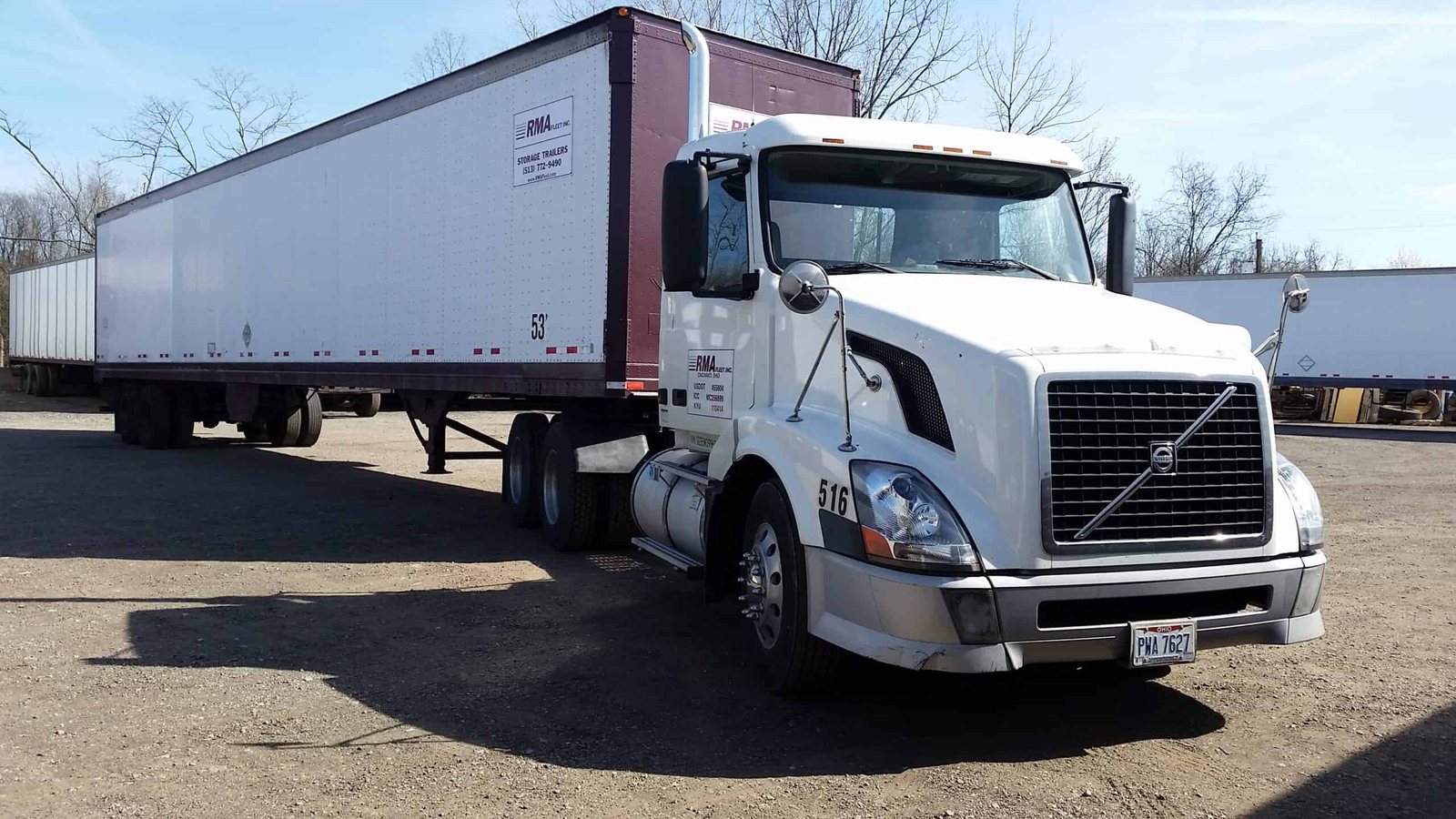
Search for on-site storage and the internet will hand you shipping containers: steel boxes, ground level, usually 20 or 40 feet. We rent the other option, and after 35 years of putting storage trailers behind manufacturing plants and warehouses across the Cincinnati Tri-State, we can tell you the honest version: sometimes a container really is the better call, and most of the time a trailer does the same job with less handling and more room.
This is the comparison we walk through on the phone every week, written down. No scare tactics about the other guy's product. Just the differences that actually change your day.
- A storage trailer sits at dock height on wheels, so a forklift can drive pallets straight in from your dock with no ramp and no lifting.
- A storage container sits on the ground, which is better for foot traffic and hand loading but slower for pallets and bulk material.
- Trailers move: we deliver one to your lot, spot it where you want it, and haul it away when the season ends.
- Our trailers run 28 to 53 feet. A 53 foot trailer holds roughly a third more cubic space than a standard 40 foot container.
- Rentals with us are a 3 month minimum, then month to month, which fits project and seasonal overflow instead of locking you into a year.
What is the real difference between a storage trailer and a storage container?
Everything else in this comparison flows from those two facts. The trailer stands about 48 to 52 inches off the ground, which is exactly the height of a loading dock. The container sits flat on the ground. The trailer rolls on its own wheels behind a tractor. The container needs special equipment every time it moves.
Neither is "better" in the abstract. They are different tools, and the right one depends on what you are storing, how often you touch it, and what your site looks like.
Which one is easier to load every day?
This is the question that decides most rentals. If your material moves on pallets, dock height is the whole game. Your crew loads a trailer the same way they load an outbound truck, because structurally it is one. No ramp, no double handling, no rain soaked plywood incline in January.
If your material is furniture, tools, boxes, or anything carried by hand, ground level wins. Walking a dolly into a container beats climbing four feet into a trailer, and that is exactly the case where we will tell you a container suits you better.
What does delivery actually look like?
Because we run our own local trucking out of West Chester, delivery is not a subcontracted mystery. Our driver spots the trailer where your operation needs it: against the dock, along a fence line, nose out for a second move later. If you need it shifted mid rental, that is a phone call, not a crane rental.
One more practical point: a trailer never becomes a permanent fixture. Containers have a way of settling into gravel and staying for a decade. When your project ends, the trailer leaves, and your lot goes back to being a lot.
Which one is cheaper over a season?
We publish our numbers, and the home page has a calculator that turns trailer sizes into cost per square foot, so run your own math there. When you price containers, watch for the line items that show up after the quote: delivery, pickup, relocation fees, and long minimum terms.
Our terms are simple: 3 month minimum, then month to month. Seasonal overflow is the exact use case that structure was built for. You are not paying July rates in February for space you emptied in January.
When is a container actually the better call?
We would rather tell you this than have you find out after delivery. Ground level foot traffic, very long static storage, and dockless sites are legitimate container territory. Some operations even run both: a container for the crew's tools, trailers for the pallet freight.
But if you have a dock, a forklift, and freight that moves in and out on pallets, the trailer is the tool that was designed for your building. Manufacturing overflow, warehouse rework, retail seasonal inventory, records and fixtures between fit-outs: that is trailer work.
How it works with RMA Fleet
We have rented storage trailers to Tri-State manufacturers, warehouses, and contractors since 1990, from our own yard at 6732 Lake Dr in West Chester. Four lengths: 28, 45, 48, and 53 feet, road ready and weather tight. We deliver, we spot, we swap sizes if your needs change, and we haul it away when you are done. Browse the storage trailer lineup, check the areas we serve, or request a quote and we will talk through whether a trailer or a container genuinely fits your site better. If the answer is a container, we will say so.
Frequently asked questions
Do I need a loading dock to use a storage trailer?
No. Plenty of our trailers sit along fence lines at sites with no dock, loaded by forklift through the rear doors. A dock makes daily pallet loading fastest, but it is not required. If most of your loading is by hand at ground level, tell us, because that is the case where a container may serve you better.
How much more space does a 53 foot trailer have than a 40 foot container?
A 53 foot trailer gives you roughly a third more cubic capacity than a standard 40 foot container, on a footprint that is only 13 feet longer. If you are comparing quotes, compare the usable cubic feet and the cost per square foot, not just the monthly rate.
Can the trailer be moved after it is delivered?
Yes. Because it rolls on its own wheels, repositioning a trailer on your lot, or moving it to another facility, is a truck move we handle ourselves. A container needs tilt bed or crane equipment every time it moves, which is a separate service call with its own cost.
What are the rental terms?
3 month minimum, then month to month. That structure fits seasonal overflow and project storage: you keep the trailer through your busy stretch and release it when the need ends, instead of committing to a year of rent for four months of use.
Weighing the two in the Miami Valley? Our Dayton trailer rental page sorts out the three different products that all get called trailers for rent.