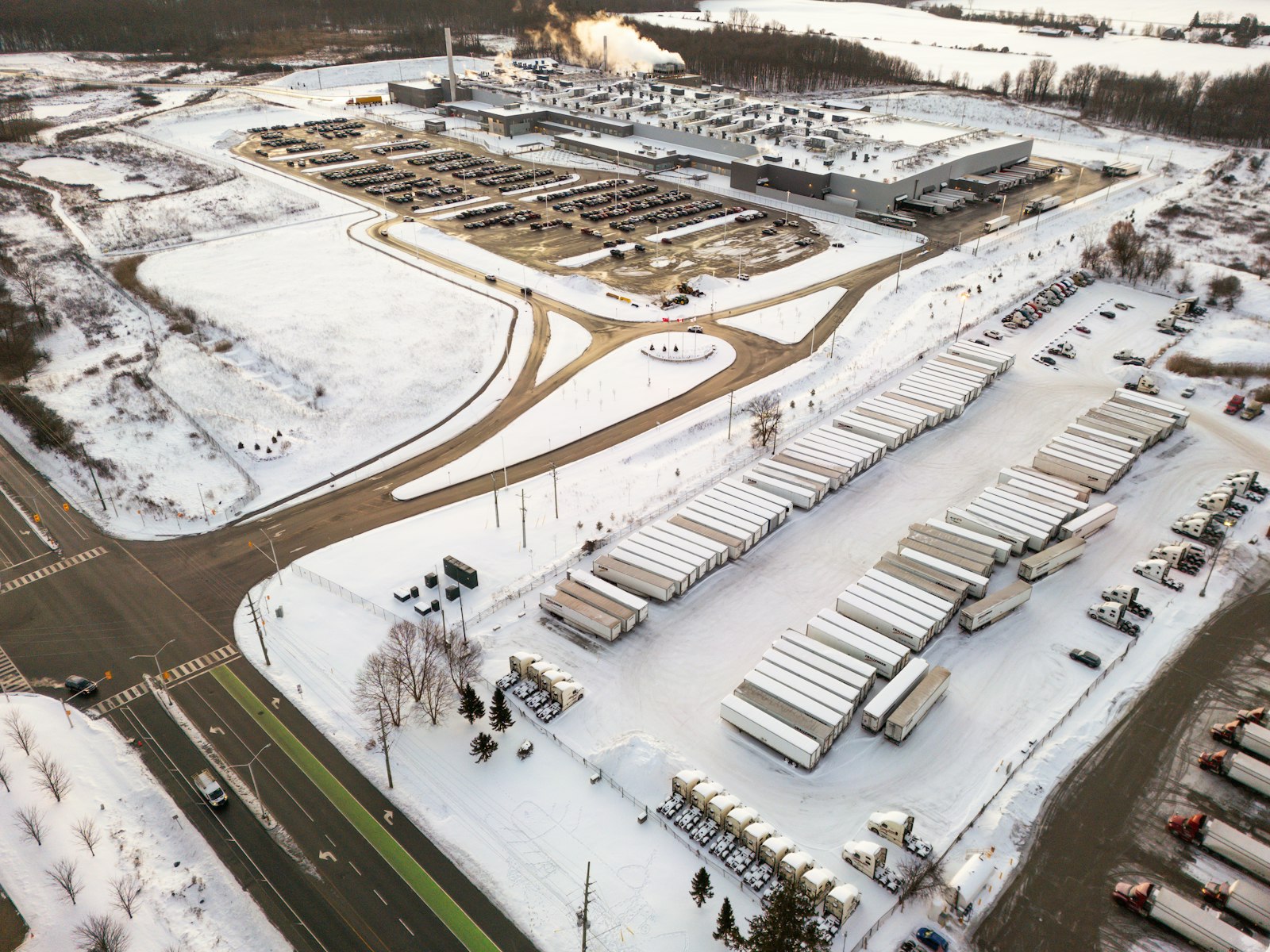
Call around for a trailer and you will hear two words used as if they mean the same thing. One company says lease, the next says rent, and a third quotes you a program with its own name. They are not the same deal. A lease and a rental put a trailer on your property on very different terms, and picking the wrong one means either paying for years of commitment you never needed or scrambling every few months for something that should have been settled.
We have rented storage trailers across the Cincinnati Tri-State since 1990, and a fair share of the people who call us open with the word lease. Most of them want a rental. Some genuinely need a lease, and we tell those callers so. This post lays out the real difference, who each arrangement is built for, and the questions that sort it out before you sign anything.
- A lease is a long commitment, usually measured in years, built for companies that will use the same trailers every day for a long time. A rental is shorter and looser, built around a need that has a beginning and an end.
- If the trailer will sit at your site holding inventory, parts, or equipment, a storage trailer rental is almost always the better fit. If it will haul loads over the road every day under your own authority, look at a lease.
- RMA Fleet rents rather than leases: 28, 45, 48, and 53 foot dry vans on a 3-month minimum, then month-to-month until you release the trailer.
- The lowest monthly number is not the cheapest arrangement. Compare the commitment, who pays to keep the trailer sound, and what it costs to get out early.
- Before signing either one, know how confident you are in the end date. If you can name the month the need goes away, rent.
What is the actual difference between leasing and renting a trailer?
Look at how the two are priced and you see why they behave so differently. A leasing company is effectively financing a trailer across a long stretch of your business. It wants predictable payments over years, so it offers a lower effective rate in exchange for your promise to keep paying whether you use the trailer or not. Walk away early and the agreement usually spells out what you owe for the rest of the term, which can be most of it.
A rental is priced around flexibility. The owner expects the trailer to come back and go out again to someone else, so the arrangement is built for turnover: a shorter commitment, simpler paperwork, and the owner keeps responsibility for the trailer itself. The trade is that a rental is rarely the lowest number per month if you truly plan to keep a trailer for five years. For the way most plants and warehouses use storage, that trade favors renting, because most storage needs do not last five years. Even the ones that feel permanent on day one tend to change shape within a couple of seasons.
Why do so many people ask for a lease when they want a rental?
We hear it on the phone every week. Someone asks what our lease terms are, we ask what the trailer is for, and the answer is overflow inventory for the fall, or a place to stage parts during a line changeover, or tooling that got pushed out of a bay by a renovation. None of those is a lease situation. They are storage problems with a recognizable shape: a start date, a busy stretch, and an end the caller can already see coming, even if it is fuzzy.
The mismatch matters because a leasing quote answers the wrong question. It will be structured around years, it may assume the trailer is running on the highway, and it may hand you maintenance duties that make no sense for a box that never moves. If you are in the Dayton area and started out searching for a trailer lease, our page on storage trailer rental in Dayton covers what businesses there usually end up choosing, and the same logic holds across the rest of the Tri-State.
When does a trailer lease make more sense than a rental?
We would rather lose a call than sell someone the wrong arrangement, so here is the honest version. If you run your own tractors and your trailers leave loaded every morning, a lease from a dedicated trailer leasing company is built for you. Those outfits manage large over-the-road fleets, handle spec'd equipment, and price for exactly the long, steady use you have. A storage rental is not designed to compete with that, and we do not pretend it is.
A lease can also make sense when a storage need is truly structural. A distributor that has outgrown its building, has no expansion on the horizon, and will run a fixed yard of trailers indefinitely may reach the point where a long commitment pays. Even then, our advice is to rent first. Six months of real use tells you how many trailers you actually need, in which sizes, and where on the lot they should sit. That is far better information to carry into a multi-year agreement than a forecast built in a conference room.
When is a storage trailer rental the better fit?
Most of the storage we place fits that description. A manufacturer builds finished goods ahead of the holiday shipping season and needs somewhere dry to hold them for a few months, the exact pattern we walked through in handling Q4 inventory overflow. A warehouse takes on a new account before it has the racking to absorb it. A plant clears a bay for new equipment and needs the old contents out of the way until installation wraps. Every one of those has a natural end, and a rental ends with it.
The practical side adds up quickly. The trailer shows up on our truck, gets spotted where you want it, and leaves on our truck when you call. You do not need a tractor, a CDL, or a maintenance contract, and if something on the trailer needs attention, that is our problem rather than your crew's. Our storage trailer rental program runs 28, 45, 48, and 53 foot dry vans with same-day delivery across the Tri-State service area when you call before the daily cutoff. If you are unsure which length fits your freight, our storage trailer size guide walks through the decision.
How do cost and commitment compare over a year?
We are not going to put numbers in this post, because trailer pricing depends on size, availability, location, and term, and a figure in a blog is stale the week it goes up. What we can do is show you how to read two quotes side by side, because the monthly line is the least informative part of either one.
Start with the commitment. Every rental with us carries a 3-month minimum, then runs month-to-month until you release the trailer, so your worst case is three months of a trailer you ended up not needing. On a multi-year lease, the worst case is the balance of the term. Next, look at who keeps the trailer sound: tires, doors, roof, floor. On a storage rental that stays with the owner. On many leases it moves to you, and those costs never appear in the rate. Then look at the exit. Needs double, shrink, or disappear. A rental adjusts with a phone call, and swapping a 45 for a 53 is one truck move. A lease adjusts through a renegotiation. Put those three things next to each other and the right answer for a one-year need is rarely close.
What should you ask before you sign either one?
Bring these to every quote call, ours included:
- What is the minimum term, in writing? Short term means different things to different companies.
- What does it cost to end early? If the answer takes a while to arrive, that is your answer.
- Who maintains the trailer? Doors, floor, roof, tires, and anything that fails during the term.
- Are delivery and pickup handled for you? And on whose trucks, with whose drivers.
- How quickly can you add or swap a trailer? Storage needs rarely stay the size they started.
Then answer one question yourself: how sure are you of the end date? If you can name the month the need goes away, rent. If you honestly cannot picture it going away, get lease quotes and compare them against renting for the first stretch. Our walkthrough of semi trailer storage rental from quote to pickup shows what renting with us looks like at every stage, so you can hold it next to any lease proposal line for line.
Rent the square footage, lease the fleet
That is the short version. If the trailer hauls freight every day for years, lease it from a company built for fleets. If it sits on your lot holding product, parts, or equipment until a busy stretch passes, rent it. We rent storage trailers across southwest Ohio, northern Kentucky, and southeastern Indiana out of our West Chester yard, and our own trucks deliver and retrieve every one. If freight moves are part of the same problem, our local trucking side runs out of that yard too.
Check your town on the areas we serve page, then request a quote or call (513) 772-9490. Tell us what is going in the trailer and how long you think you will need it, and we will tell you straight whether a rental fits or whether you should be talking to a leasing company instead.
Frequently asked questions
How much does it cost to lease or rent a storage trailer per month?
It depends on the trailer size, how many you need, the delivery location, and the term, which is why any number quoted without those details is a guess. Call us with those four answers and we will give you a real rental quote, usually in the same conversation.
Does RMA Fleet lease trailers?
No. We rent storage trailers: 28, 45, 48, and 53 foot dry vans on a 3-month minimum, then month-to-month, with no long-term lease or contract. If what you need is a multi-year over-the-road fleet, a dedicated trailer leasing company is the better call, and we will tell you so.
Can a storage trailer rental run for years?
Yes. After the 3-month minimum the rental continues month-to-month for as long as you keep the trailer, and plenty of our trailers have stayed at the same site for years. The difference from a lease is that you can release the trailer whenever the need ends.
Can I rent a storage trailer for less than three months?
Every rental carries a 3-month minimum, because delivery and pickup take real trucks and drivers. If your need is genuinely shorter, tell us on the quote call and we will talk through whether the math still works for you.
Is leasing a trailer cheaper than renting?
Often on the monthly rate, rarely on the total for a short need. A lease trades a lower rate for a long commitment and, frequently, maintenance duties. If you will not use the trailer for the full term, the months you pay for and do not need usually erase the savings.