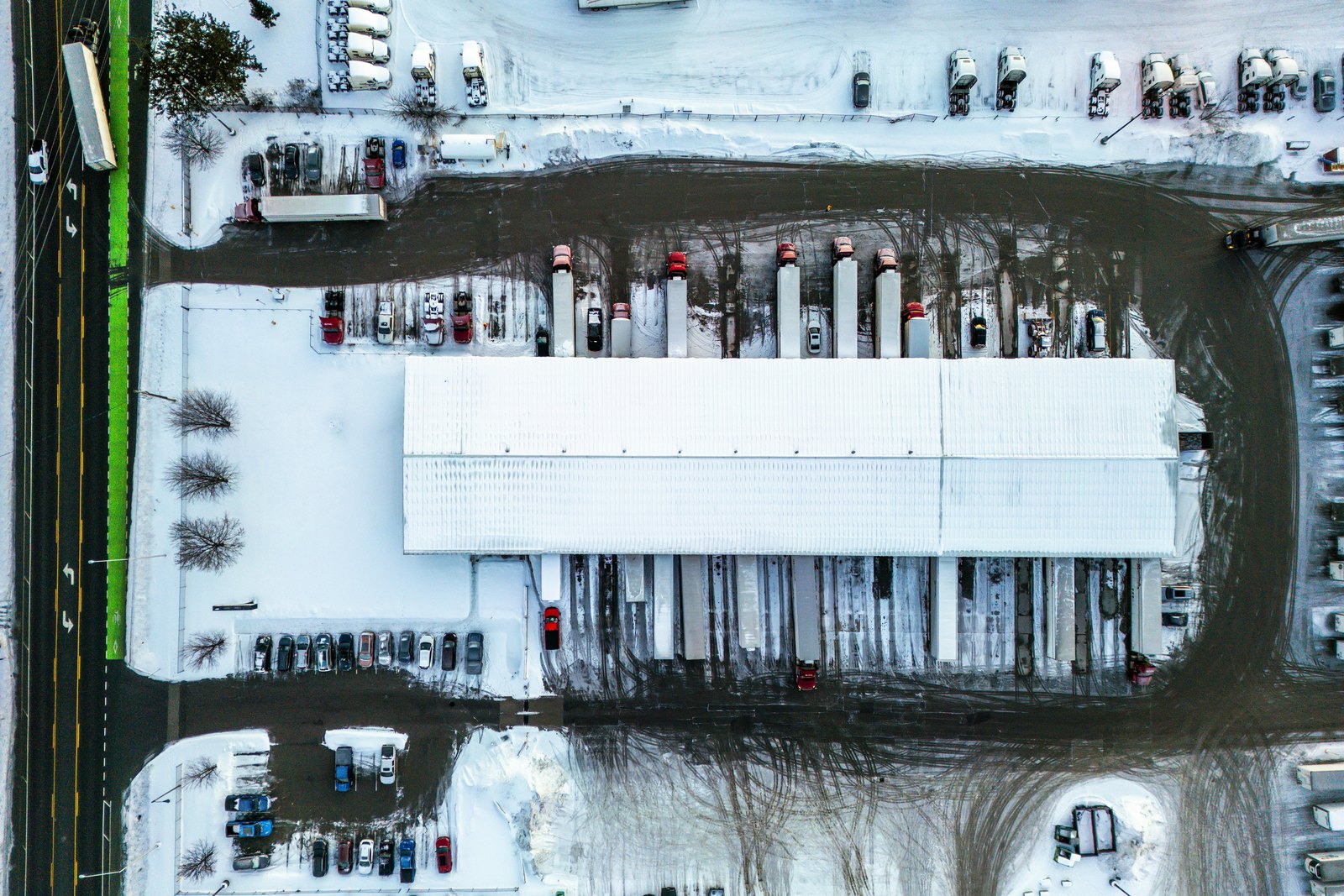
Every year around the first week of October the questions change. Through the summer people ask about size and delivery dates. Once the forecast starts carrying overnight lows in the thirties, they ask a different thing, usually some version of the same worry: if I put product in a trailer in my yard, what is it going to look like in February.
It is a fair question and it has a real answer. A storage trailer handles a Tri-State winter fine. What it does not do is heat, and it does not dehumidify. Almost everything that goes wrong in a parked trailer between November and March traces back to those two facts, plus a yard that nobody thought about until the plow showed up. None of it is hard to get ahead of, but October is when you do it, not January.
- A dry van is weather-tight. Snow and rain are not the problem. Condensation from humid air and damp product sealed inside on a mild day is.
- The inside tracks the outside temperature within a few degrees. Anything with a freeze point or a printed temperature range should not be in there.
- Snow on the roof is a non-issue. Nobody needs to get up there. The costly problems are at ground level: the door apron, the walk-around and the plow berm.
- Placement decided in October is worth more than anything you can do in January. Firm level ground, a clear apron and a path the plow can work around.
- Rental is a 3-month minimum and then month to month, which lines up naturally with spotting a trailer in the fall and deciding in spring whether to keep it.
Does a storage trailer stay dry through the winter?
Here is the part that surprises people. Air holds moisture, and warm air holds a lot more of it than cold air does. When you load a trailer on a damp fifty degree afternoon in November and close the doors, you have sealed in a box of humid air. That night the temperature drops into the twenties. The steel and aluminum skin of the trailer cools fast, the air inside cools with it, and the moisture it can no longer hold has to go somewhere. It goes onto the coldest surfaces it can find, which are the walls and the underside of the roof.
By morning there is a film of water up there. Enough of it and it beads, and beads run, and they drip onto whatever is stacked underneath. Cardboard wicks it. Pallets hold it. Nothing dramatic happens on day one, but a carton that has been damp for a month is a carton you are going to argue with somebody about.
The worst days for this are not the coldest ones. They are the swings. A hard freeze right after a warm wet spell, and the January thaw when it goes from fifteen degrees to the mid forties and back inside a week. Steady cold is actually easy. The air inside stays cold, it holds almost no moisture, and nothing condenses.
Where does the moisture actually come from?
The air is the obvious one and the easiest to manage. Load in the morning when it is cooler and drier rather than on a mild wet afternoon, and the air you trap carries less water to give up later.
Product and packaging are the one people miss. Corrugated, wood pallets and raw lumber all carry moisture, and they release it slowly for days. If a load came off a truck that sat in the rain, or sat on your yard overnight, it is wet even if it looks dry. Give it time inside the building before it goes into the trailer. Shrink wrap does not help here either, because it traps moisture against the product instead of letting it dry out.
The ground matters more than people expect. Asphalt and concrete hold water, and a trailer parked over a wet apron has moisture rising into it all winter. It is one more reason the spot you pick in October is worth thinking about.
How do you keep condensation out of a parked trailer?
Keeping product off the deck is the single highest return thing on the list. Everything goes on pallets or dunnage, nothing sits flat on the floor, and you leave a few inches between the stack and the walls. Air moving around a load is what keeps a damp spot from turning into a stain. Stacking tight to the sidewall is how you find a wet row in March.
Air movement is the piece people get wrong in both directions. On a cold dry day, opening the doors for an hour swaps humid inside air for dry outside air and genuinely helps. During a thaw or on a wet day it does the opposite, because you are inviting warm wet air into a cold box, which is exactly the condition that makes water. If you are going to crack the doors, do it when it is cold and clear.
For products that genuinely cannot tolerate moisture, desiccant bags or poles are cheap and they work, but they have a capacity and they saturate. Put them in, then actually look at them in six weeks. A saturated desiccant bag is doing nothing while making everyone feel covered.
One more habit worth building: open the doors and look inside once a month. It takes five minutes, and spotting a wet ceiling in December is a completely different problem from finding a damaged pallet in March.
What should not go in an unheated trailer?
The usual list: water-based paints, coatings and adhesives, most cleaning chemicals, anything in an aerosol, batteries, certain electronics, and anything food grade or with an expiry. Liquids in sealed containers are the ones that cause real damage, because they expand when they freeze and you find out by opening a door onto a mess.
We want to be plain about this because it is a scope question, not a sales one. RMA Fleet runs dry vans. We do not rent refrigerated trailers, we do not rent heated ones, and we are not going to tell you a dry van will look after temperature sensitive product because it will not. If that is what you need, we will say so on the phone rather than let you find out in January. The same honesty applies in reverse: the overwhelming majority of what sits in these trailers, packaged goods, parts, fixtures, seasonal inventory, equipment, raw stock, does not care in the slightest that it is twenty degrees.
If you want the fuller picture of what a trailer is and is not, we went through it in what a warehouse on wheels actually means.
Is snow on the roof a problem?
This comes up every winter and it is worth putting to rest. These are not carports or temporary structures. The snow load question people are really asking belongs to a fabric building or a flat-roofed shed, not to a piece of road equipment that spends its working life at seventy miles an hour in whatever the weather is doing.
What does deserve attention is the water coming off that roof. Snow melts in the afternoon, runs off the edges, and refreezes overnight into a ridge of ice right where your people are standing and your forklift is driving. That ice band along the door end of the trailer causes more winter trouble than anything happening on top of it. Sand or salt it the same way you would any other working surface, and keep an eye on it after a thaw.
Door seals are the other small thing worth knowing. Water sitting in the seal and freezing overnight is why a door that worked fine on Friday will not budge on Monday morning. It is not damage and it is not force that fixes it. Keep the seal clear of slush when you close up, and if it does freeze, warm it rather than pry it.
How do you keep the trailer usable when the lot is frozen?
Ground first. Landing gear sits on a small footprint, and soft ground that freezes and thaws repeatedly through the winter will let a trailer settle unevenly. Gravel that drains, or paved surface, beats a soft shoulder every time. If the only available spot is soft, pads under the landing gear are worth the five minutes. We cover placement in more detail in how storage trailer delivery works, and it is worth reading before you point at a spot in the yard.
Then think about the plow, and tell your snow contractor before the first storm rather than after. A plow crew with no instructions will push snow toward whatever is standing still, and a berm packed against the side of a trailer freezes into something you need a loader to remove. It blocks your walk-around, it holds water against the trailer all winter, and as we pointed out in storage trailer security basics, a packed berm is also a very convenient step for anyone who should not be climbing up there.
Leave the forklift room it needs. A dock-height trailer worked off a ramp or a dock plate needs clear approach, and that approach is the first thing that disappears under snow. Decide in October where the plowed lane runs and where the pile goes, and you will not be shoveling by hand in a January dark at six in the morning.
When should you have it on the ground?
The rental terms line up with the season without anyone having to plan around them. Rental runs a 3-month minimum and then goes month to month, with no long-term lease. A trailer spotted in early October carries you through the minimum to roughly the start of January, which is most of the weather, and from there you decide month by month whether the space is still earning its keep. Plenty of customers who bring one in for winter overflow keep it through spring because by February they have stopped thinking of it as temporary.
If what is driving this is seasonal volume rather than weather, the companion piece is handling Q4 inventory overflow without a lease, which covers the timing side of the same decision.
Sizes are 28, 45, 48 and 53 feet, all dry vans, all delivered to your dock, yard or job site anywhere inside our hundred mile radius of West Chester. If you are not sure which size the winter actually calls for, the size guide works through it honestly, and it is a shorter conversation than most people expect.
Get it placed before the ground hardens
Winter does not do anything exotic to a storage trailer. It just removes the margin for a few decisions that are easy to make in October and awkward to fix in January. Load dry, keep the load off the deck, do not put anything in there that minds the cold, and park it somewhere the plow and the forklift can both live with.
Call (513) 772-9490 and tell us what is going in it and where it is going to sit, or use the quote form. We will tell you the size that fits and whether what you are storing belongs in a dry van at all. You can also see what we cover across the region on the areas we serve page, or read the full offering on storage trailer rentals. RMA Fleet has been family owned in West Chester since 1990, and we have watched a lot of product go through a lot of Ohio winters.
Frequently asked questions
Will my inventory get wet inside a storage trailer in winter?
Not from rain or snow. A road-going dry van is weather-tight and sheds both. The water people find in February came from inside: humid air and damp product sealed in on a mild day, which condenses on the cold walls and ceiling when the temperature drops overnight. Load dry product, let anything brought in from outside acclimate before you close the doors, and keep the load off the floor, and the problem largely goes away.
Can I store paint, liquids or anything that freezes in a storage trailer?
No. A storage trailer is unheated, so the inside follows the outdoor temperature within a few degrees. Anything with a freeze point or a printed temperature range belongs indoors. That includes water-based paints and adhesives, many cleaning chemicals, batteries, some electronics and anything food grade. We run dry vans only, not refrigerated or heated equipment, so if the spec says keep above a certain temperature we will tell you a trailer is the wrong box.
Does snow on the roof damage a storage trailer?
No. A dry van roof is built for highway service in every kind of weather and a normal Tri-State snowfall is well inside what it handles. Nobody needs to climb up and clear it, and we would rather you did not. The winter problems that actually cost you time happen at ground level, at the doors and on the apron where your forklift works.
Do I need to keep snow cleared around the trailer?
Yes, and it is worth telling your snow removal contractor before the first storm. The trailer needs a clear apron at the doors for the forklift and a path the plow can work around. Tell the plow crew not to push the berm against the trailer. A berm packed against the side freezes solid, blocks the walk-around, and gives anyone climbing up a convenient step.
How long do I have to rent a storage trailer for?
There is a 3-month minimum, and after that it goes month to month with no long-term lease or contract. For winter overflow that works out naturally: a trailer spotted in October covers you through the worst of the weather, and you decide month by month after that whether to keep it or send it back.