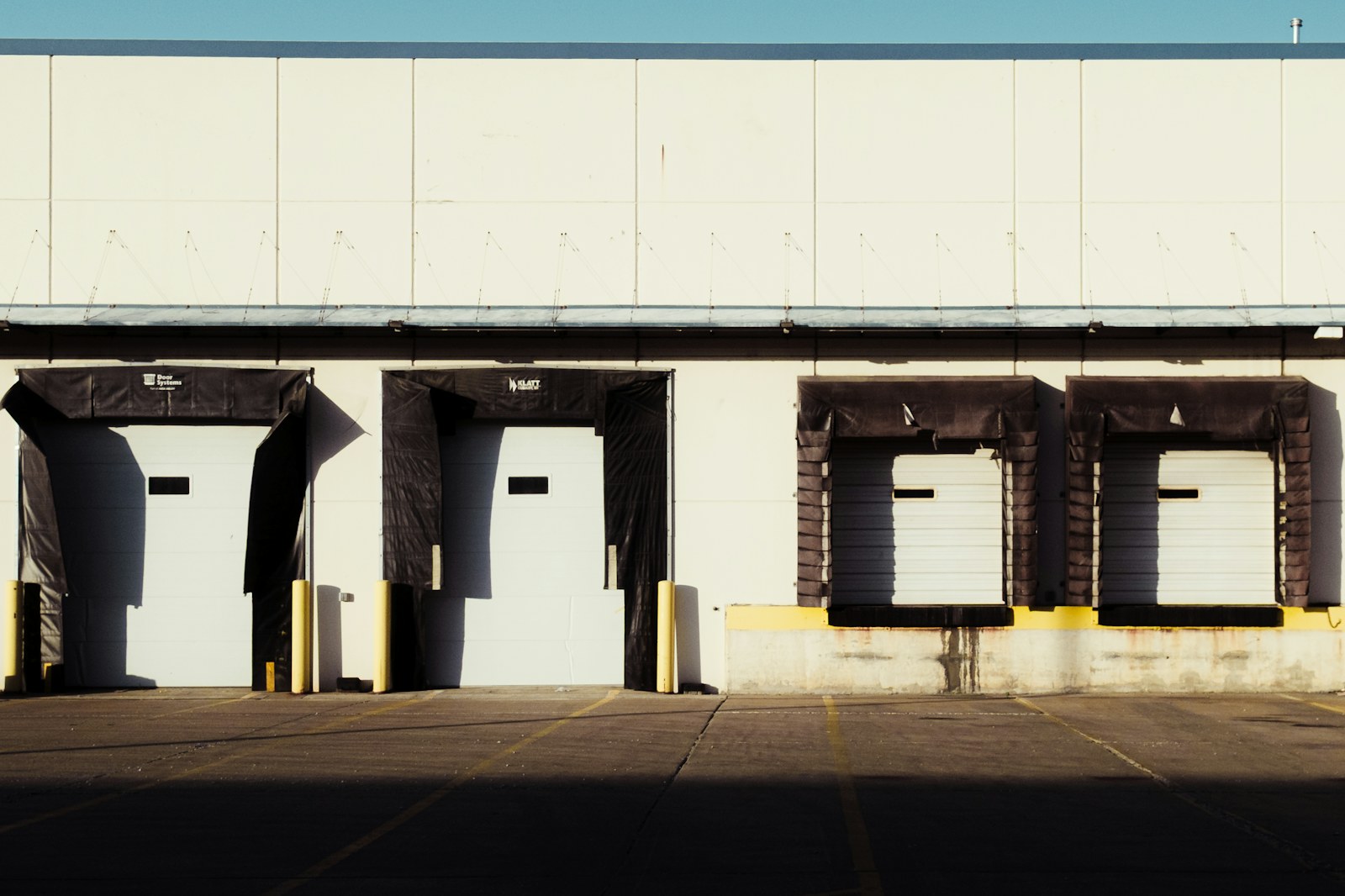
Every quote we send says the same two words, and every week somebody calls to ask what they mean. "Delivered and spotted." It sounds like industry shorthand because it is, and if you have never rented a storage trailer before, it is fair to want the plain-language version before a 53 foot piece of equipment shows up at your gate.
We have been delivering storage trailers across the Cincinnati Tri-State since 1990, with our own trucks and our own drivers out of West Chester. This post is the walkthrough we give on the phone: what spotting actually is, what happens on delivery day, what you should have ready before the truck turns into your lot, and how the whole process compares to having a storage container dropped. None of it is complicated. It just goes better when you know what is coming.
- "Delivered" means we haul the trailer to your site with our own truck. "Spotted" means the driver places it exactly where you want it, sets the landing gear, and unhooks.
- You need no equipment to receive a trailer. It arrives on its own wheels; the driver does the backing, placement, and setup. Most drops take well under an hour of yard time.
- A trailer is spotted by backing it in, so it needs a firm surface, roughly 14 feet of overhead clearance, and enough straight run for a tractor and trailer to line up.
- Container delivery works differently: a tilt-bed truck slides the box onto the ground, which needs a long clear lane and leaves the floor at ground level instead of dock height.
- A spotted trailer is not stuck. Respotting it to another door or another corner of the yard is a quick truck-and-driver job, which is work we do in-house.
What does "delivered and spotted" actually mean?
The phrase splits the job in two because the second half is where the skill lives. Getting a trailer to your address is trucking. Putting it precisely where a forklift can work it, square to a dock door or tucked along a fence with the doors facing the right way, is spotting, and it is the part our drivers have done thousands of times. When the tractor pulls away, what is left is a sealed, weathertight storage unit standing on its own gear.
One detail first-timers find surprising: nothing about the process touches your building. There is no anchoring, no hookup, no utilities. The trailer stands on its landing gear and rear axles, which is also why it can leave as easily as it came.
What happens on delivery day?
Here is the sequence, start to finish. The truck arrives in your delivery window and the driver checks in with whoever you named as the site contact. They agree on the spot, and if you marked it with paint or a cone, that works too. The driver swings the rig, backs the trailer in, and squares it up. Then the landing gear comes down, the driver checks that the ground under the gear pads is taking the weight, pulls the release, and drives the tractor out from under the trailer.
Your part of delivery day is mostly deciding where the trailer goes, which is worth thinking about before the truck is idling in your lot. Backed to an open dock door, the trailer becomes a dock-height extension of your building, which is the setup we covered in our dock-height loading post. Spotted along a fence line or a side yard, it is standing bulk storage that a forklift works from the rear doors. Plants that keep a trailer year-round, the habit we wrote up in why manufacturers keep a storage trailer on site, usually settle on a permanent spot within the first week.
How is trailer delivery different from container delivery?
If you have been pricing "storage container rental," delivery is one of the places the two options genuinely diverge. A container has no wheels, so the truck that brings it has to set it down, usually by tilting the bed and letting the box slide off as the truck pulls forward. That maneuver needs a straight, unobstructed run, level ground, and clearance overhead for the raised bed. Once the box is down, it is down: moving it again means bringing the specialized truck back, and every pallet going in or out gets lifted from ground level.
A trailer skips all of that. It rolls in on its own running gear, the driver backs it exactly where it belongs, and repositioning it later is an ordinary tractor hookup. The floor sits at dock height, so if you have dock doors, your forklifts drive straight in. We put the full comparison, costs and honest trade-offs included, in our storage trailer vs. storage container breakdown, and if you started your search on the container side, our storage trailer rentals page shows how the trailer covers the same job. Containers still win in one specific case: no dock, no forklift, and freight that gets walked in by hand. For everything palletized, the delivery method that ends with a floor at dock height is the one that saves labor every day after.
How should you prep your site before the truck arrives?
Surface matters most. A loaded trailer concentrates real weight on its landing gear pads, and gear that was set on sun-soft asphalt or wet earth can settle over a season. On anything other than concrete, our drivers set the gear on wood cribbing or steel plates to spread the load. If your only open ground is gravel, that is normal for industrial yards and completely workable. Tell us when you book and we plan for it.
Overhead, a standard trailer runs 13 feet 6 inches tall, so walk the approach path and look up: power lines, tree limbs, canopy edges, and door headers are the usual offenders. Give yourself a margin and call it 14 feet. For maneuvering room, the tractor and trailer together stretch about 70 feet, and a driver backing into a dock or fence spot wants a reasonable straight run to line up. If your yard is tight, do not talk yourself out of it. Send us a couple of photos or walk the site with us on the phone, and we will tell you honestly whether the spot works. Our drivers thread tight yards across the region every week.
Can the trailer be moved after it is spotted?
Operations change their minds, and a trailer forgives that. The spot that made sense in week one turns out to block the snowplow route in December, or receiving needs the trailer at door 4 instead of door 9 for a month. That kind of move is a quick visit from one of our tractors. Longer moves work the same way: some customers load a trailer at one facility and have us pull it to another, which turns storage into staged freight. That is local trucking, the other half of our business, done with the same trucks and drivers who delivered the trailer in the first place.
If a move is even a maybe, mention it up front. Knowing a trailer might migrate changes nothing about the rental and helps us spot it facing the right direction the first time.
How fast can RMA Fleet deliver in the Cincinnati Tri-State?
Because the fleet and the drivers are ours, there is no dispatch broker between your call and the truck. You tell us the address, the spot, and the week you need it, and we tell you plainly what the schedule looks like. Delivery runs cover the whole region, Ohio, Northern Kentucky, and Southeast Indiana, and you can check your town on the areas we serve page. Sizing questions get sorted on the same call. The fleet runs 28, 45, 48, and 53 foot trailers, and our trailer sizing guide covers the pallet math if you want to arrive with a number in mind.
Delivery is the easy part, on purpose
More than three decades of doing this has taught us that the rental itself is rarely the hard decision. What holds people up is uncertainty about the mechanics: what shows up, what it needs, what it commits them to. So here is the whole commitment in one paragraph. We deliver and spot the trailer where you want it. You load it and work it with the crew and equipment you already have. Terms run a 3 month minimum, then month to month. When the freight is gone, we hook up and the trailer disappears the same way it arrived.
Look over the storage trailer options, then request a quote or call (513) 772-9490. Tell us where the trailer needs to sit and what is going in it, and we will handle the part with the wheels.
Frequently asked questions
Do I need to be on site when the trailer is delivered?
It helps, but it is not required. If you or a yard contact can meet the driver, the placement gets confirmed in person. If not, clear instructions work fine: mark the spot with paint or a cone, tell us which dock door or fence line, and the driver spots it exactly there.
Do I need a forklift or crane to receive a storage trailer?
No. A storage trailer arrives on its own wheels behind one of our trucks, and the driver places it with the tractor. There is no craning, no tilt-bed slide, and no equipment needed from your side. That is one of the biggest practical differences from a storage container delivery.
What does storage trailer delivery cost?
It depends on your distance from our West Chester yard, so we quote it up front with the rental rather than publishing a flat number. When you call, tell us your address and where the trailer will sit, and the quote covers delivery, the rental, and pickup at the end. No surprises on the invoice.
What if my yard is tight or partly unpaved?
Tell us before delivery day. Our drivers spot trailers in tight industrial yards every week, and a quick phone walk-through or a couple of photos of the site is usually enough to plan the approach. Firm gravel is workable with support under the landing gear; soft ground is the one thing to avoid.
Delivery timing moves with distance from our West Chester yard. Mason is one of the shortest runs we make, at roughly fifteen minutes.