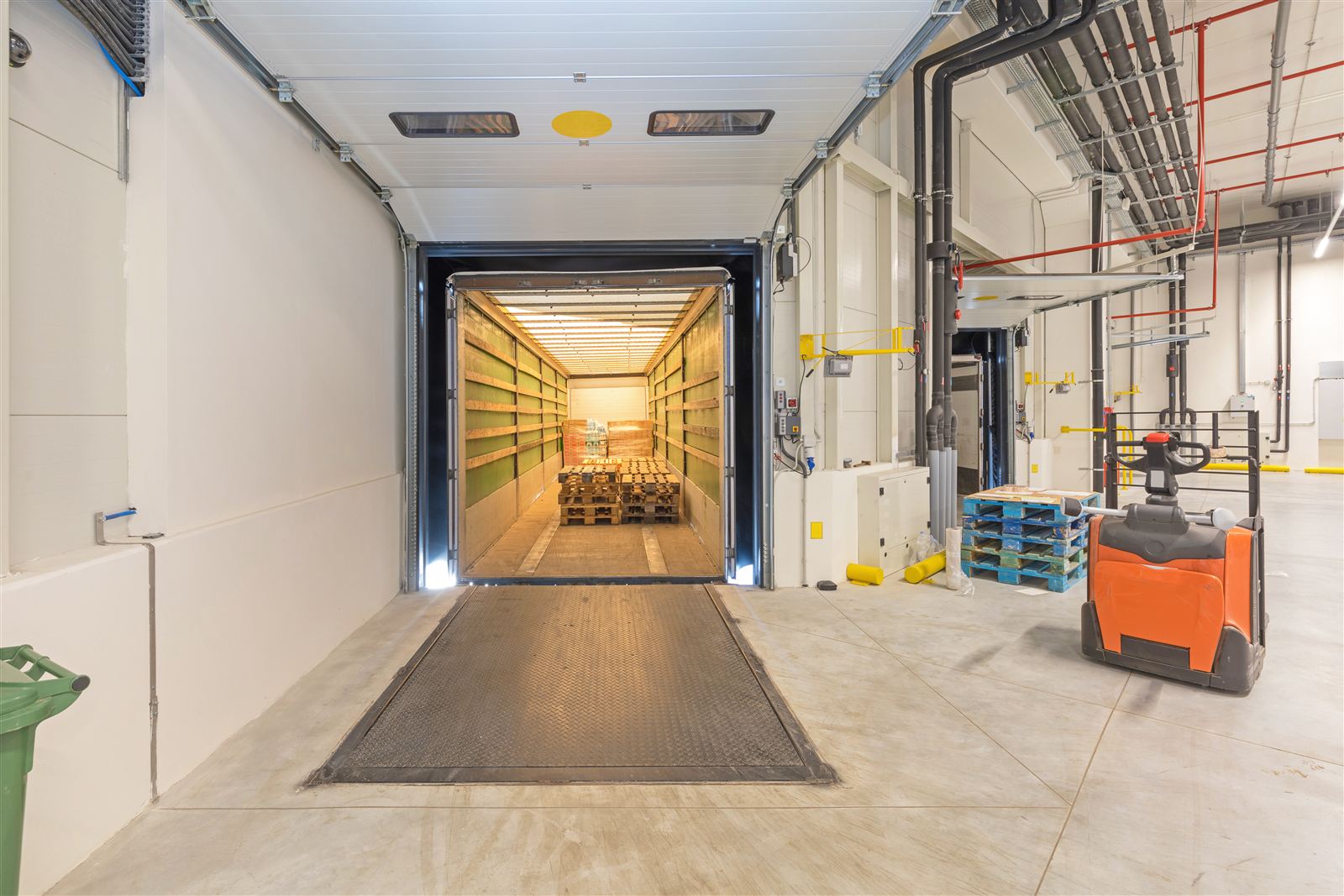
Walk any warehouse in the Tri-State at 7 am and watch the first trailer of the day get worked. The forklift rolls over the dock plate, drives into the box, sets a pallet, backs out for the next one. Nobody thinks about it, because that is what the building was designed to do. Every dock door in your wall is a promise: freight moves at floor height, on forks, without being touched twice.
Then a storage container shows up on the lot and the promise breaks. The box sits on the ground, four feet below the floor your whole operation runs on. We have rented storage trailers to Cincinnati plants and warehouses since 1990, and this single difference, dock height, decides more rentals than price does. Here is the honest version of why, including the cases where ground level genuinely wins.
- A storage trailer floor sits 48 to 52 inches above grade, level with a standard loading dock, so a forklift drives pallets straight in with no ramp.
- A ground-level container forces ramp work or doorway-only forklift access, which turns one-touch pallet moves into slower multi-step handling.
- A 53 foot trailer floor holds 26 standard 40 by 48 pallet positions. A standard 40 foot container holds about 20, with roughly a third less cubic space.
- Trailers arrive on their own wheels. We deliver, spot at your dock or fence line, and reposition or swap the trailer as your needs change.
- Terms are a 3 month minimum, then month to month, sized for seasonal overflow instead of a year-long commitment.
What does dock height actually mean?
A storage trailer is a semi trailer doing storage duty, and the entire materials handling world is standardized around it. Your dock levelers, your seals and shelters, your trailer restraints, the reach of your forklift forks: all of it was engineered for a box floor at roughly four feet. When the storage sitting behind your building matches that height, none of your equipment or process has to change.
That is the quiet advantage. Renting dock-height storage does not add a new workflow to your operation. It adds square footage to the one you already run.
Why is ground-level loading slower for palletized freight?
Watch a crew work a ground-level container with a ramp in the rain and you will see the problem in about ninety seconds. The incline is steel, the wheels are small, and the load wants to roll back down. Most operations give up on the ramp and let a forklift feed the doorway instead: carry a pallet to the container, set it just inside, then send someone in with a pallet jack to drag it deep. That is two handling steps where a trailer needs one.
Cincinnati weather makes it worse. A ramp that works fine in July is a different piece of equipment in January with freezing drizzle on it. A trailer backed to a dock with a seal around the door keeps the freight, the forklift, and the crew in the dry, all winter.
How many pallets fit in a 53-foot trailer compared to a container?
Run the math the way a planner would. Twenty-six floor positions against twenty means every fourth container you would have rented is a box you did not need. And cubic space tells the same story: a 53 foot trailer gives you roughly a third more volume than a standard 40 foot container, a comparison we broke down line by line in our trailer versus container post.
Size flexibility matters just as much as raw capacity. Our fleet runs 28, 45, 48, and 53 foot trailers, so a plant clearing out a single production line can take a 28 and a distribution center absorbing a seasonal surge can take a pair of 53s. You size the box to the problem instead of rounding up to whatever the container yard has.
What do Tri-State operations actually use dock-height trailers for?
The most common call we get runs like this: a purchasing manager booked a season's worth of material at a good price, the material is showing up now, and the racking is already full. A trailer at the dock absorbs the overrun the week it lands. When the material burns down by spring, the trailer leaves. Nobody signed a warehouse lease, and nobody paid to heat empty space in February.
Manufacturers use them differently: as a pressure valve. Retooling a line means everything staged around that line needs somewhere to go for six weeks, and walking it to the far end of the plant twice is wasted labor. We covered that pattern in depth in our post on why manufacturers keep a storage trailer on site. Distribution and 3PL operations lean seasonal instead, adding two or three trailers ahead of the holiday push and releasing them in January.
One piece of honest timing advice: the Q4 wave is real. Trailers book up across the Tri-State from late September on, and the operations that call in August get their first pick of sizes. If you already know this fall will overflow, the cheap move is reserving the trailer before everyone else remembers to.
When does a ground-level container actually win?
We would rather say this plainly than have you find it out after delivery. If your crew carries boxes by hand, walking through a ground-level door beats climbing into a trailer every single time. A construction site with no dock and no forklift is container territory too, and so is the load you plan to lock up and ignore until 2029.
We put the two options side by side in our storage trailer vs. storage container comparison, and the sizes and terms are on our storage trailer rentals page. The short version: the more your freight moves on pallets, and the more often it moves, the harder the trailer is to beat. If your freight never moves and never rides a fork, a container serves you fine, and we will tell you so on the phone.
What should you check on your site before the trailer arrives?
Delivery is the part we control, because we run our own local trucking out of West Chester. Our driver has spotted trailers against docks, along fence lines, and nose-out for a second move later, at plants from Fairfield to Florence. If the trailer needs to shift mid rental because your yard flow changed, that is a phone call to us, not a crane rental and a rigging quote.
Surface matters more than most people expect. Asphalt, concrete, or well-compacted gravel all hold a loaded trailer fine with the landing gear on pads. Soft spring ground does not, so if your only spot is turf, say so when you call and we will plan for it. Either way, walk the approach before delivery day: the tractor needs a straight run, and overhead doors, awnings, and low wires are the usual surprises.
Dock height is the whole argument
Strip away everything else and the choice comes down to one question: does your freight move on forks? If it does, the storage box should sit at the height your forks already work. Your crew loads it without retraining, your dock equipment works without modification, and the pallets go in as fast as they come off the line. That is why the trailers behind Tri-State manufacturers, distribution centers, and 3PLs outnumber the containers many times over, and it is why we have kept a fleet of them rolling since 1990.
We deliver from our own yard at 6732 Lake Dr in West Chester, we spot the trailer where your operation needs it, and we swap sizes if the need changes. Terms are simple: 3 month minimum, then month to month. Browse the storage trailer lineup, check the areas we serve, or request a quote and tell us what is overflowing. If a container honestly fits your site better, we will say so before a single wheel turns.
Frequently asked questions
Is a rented storage trailer the same height as my loading dock?
Yes. A storage trailer floor sits 48 to 52 inches above grade, the standard range docks are built to. Back it to your dock, drop the plate, and forklifts drive straight in. Dock levelers and seals work with it the same way they work with any outbound van.
Can I use a storage trailer if my building has no dock?
Yes. We spot trailers along fence lines at dockless sites all the time, and a forklift works the rear doors from the yard. If everything you store moves by hand at ground level, say so up front, because that is the case where a ground level container may fit your site better.
How many pallets fit in a 53 foot storage trailer?
26 standard 40 by 48 inch pallet positions on the floor, loaded two across in 13 rows. If your freight is stackable, a second tier roughly doubles that. A standard 40 foot container floor takes about 20 of the same pallets.
What are the rental terms?
3 month minimum, then month to month. You keep the trailer through your busy stretch and release it when the need ends, instead of committing to a year of rent for a seasonal problem.
Dock height is usually the deciding factor for Montgomery County operations. See trailers for rent in Dayton for how the sizes and terms work there.