Two calls come into our office that sound almost identical. The first is a shipping manager with pallets that have to be on a customer's dock by four o'clock. The second is a shipping manager whose own dock is stacked three deep and nothing leaves until next week. Both open with some version of "I have a freight problem." They need opposite things.
RMA Fleet has run both services out of West Chester since 1990, so we take both calls. The quote gets faster when the caller already knows which one they are asking for. Here is how to sort that out in about a minute.
- Local trucking moves freight to a different address. A storage trailer gives freight somewhere to sit where it already is.
- If the load has a destination and a deadline, you want a truck. If it has nowhere to go yet and cannot stay on your floor, you want a trailer.
- Trucking with RMA is booked and quoted per load with no minimum term. Storage trailer rental runs a 3-month minimum, then continues month to month until you call for pickup.
- Our trucking stays inside a 100-mile radius of West Chester, Ohio, covering southwestern Ohio, northern Kentucky and southeastern Indiana, with same-day pickup and delivery when a truck is open.
- Plenty of plants use both: a trailer parked at a spare door for overflow, and shuttle runs when product has to move between buildings.
What is the difference between local trucking and a storage trailer?
One is motion. The other is a parking spot. That sounds obvious written down and it still trips people up on the phone, because the same trailer does either job depending on whether a tractor is attached to it.
On a freight job the trailer stays ours the whole time. It arrives, gets loaded, leaves, and you never think about it again. On a rental the trailer becomes yours to work out of. We back it into the spot you pick, unhook, and it stays there through your season. You decide when the doors open. We come back when you call.
How do you tell which one you actually need?
The one that fools people is the load with a soft date. Somebody says the product ships "sometime in November," so it feels like a shipping problem. It is not. Until a date and an address exist, that freight is inventory, and inventory needs a place, not a truck. Solving it with transportation means moving it twice and paying for both moves.
The reverse mistake is cheaper but slower. An operation rents a trailer to stage a load that is actually going out Thursday, then discovers on Thursday that the load still has to get across town. The trailer never solved anything. It held the problem for three days.
When is same-day local trucking the right call?
The obvious version is a rush. A customer moved a delivery date, a line went down and parts have to reach the other plant this afternoon, a shipment got missed and somebody has to make it right today. That is what same-day local freight delivery exists for.
The less obvious version is where we do the most volume: shuttle and dock transfer work. Product moving between two of your own facilities on a schedule that repeats, multi-stop routes, coordinated runs of up to 100 units when a move needs planning rather than a single truck. The value there is not the truck. It is that the same drivers know the route, the gate, the dock and the person who signs. If your own drivers are currently eaten up by those runs, that is the conversation worth having.
When does a storage trailer solve it instead?
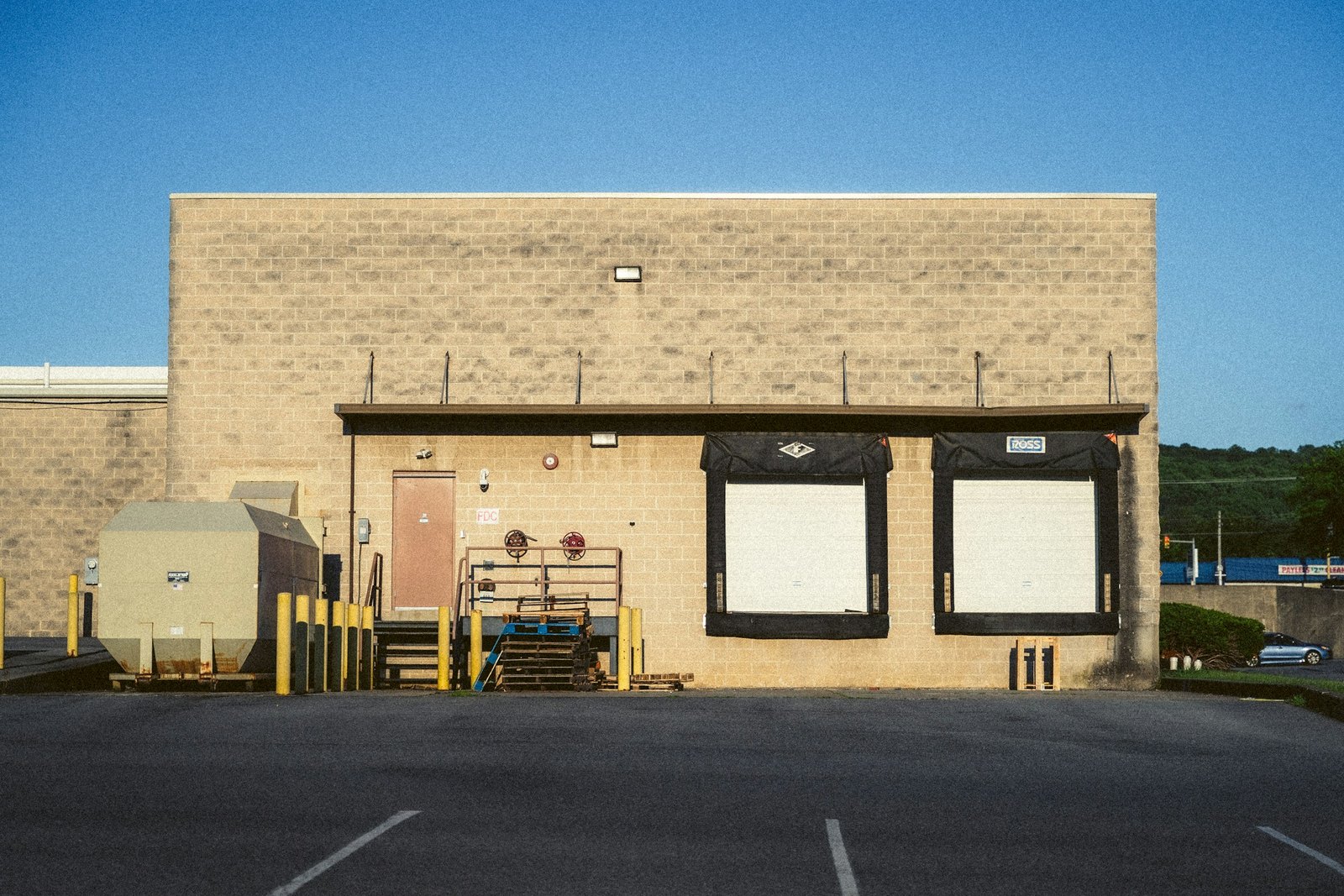
We rent dry van storage trailers in 28, 45, 48 and 53 foot lengths. The floor sits at dock height, so backed to an open door your forklifts drive straight in with no ramp and no change to how anybody works. If every door is spoken for, the trailer gets spotted in the yard on firm level ground.
The right length depends on what goes in it and how often you need back into it, which our guide to choosing a storage trailer size walks through. To picture the volume, the pallet math for a 53 foot trailer tells you whether one covers you or you need two.
Worth saying plainly: a storage trailer is weathertight, not climate controlled. It keeps rain and snow off your product and takes a serious lock. It does not hold a temperature. Anything that cannot ride out an Ohio July or an Ohio January belongs inside a building, and we will tell you that rather than rent you the wrong thing.
Can one operation need both at the same time?
It usually starts as one or the other. A company rents a trailer for fourth-quarter overflow, gets used to us being on site, and calls the next time a load has to reach Dayton by two. Or we run somebody's shuttle for a year, their building fills up in October, and they already know who to call for the trailer.
What does each one commit you to?
Those terms differ for a real reason. A freight run is one trip that starts and ends the same day. A rental takes a trailer out of the fleet for as long as it sits at your building, and it costs two trips no matter the length, one to deliver and spot it and one to retrieve it. The 3-month minimum is what makes that work at a rate we can hold.
After the minimum it is genuinely month to month. Some trailers leave after one busy season. Some have sat at the same dock for years. What we will not do is quote either service off a web page, because the honest number depends on the lane, the size, the length of the rental and where the trailer has to sit.
How far do you go, and how fast?
In practice that radius takes in Cincinnati, Hamilton, Fairfield, Middletown, Monroe, Mason, Springboro, Lebanon, Blue Ash, Loveland and Dayton on the Ohio side, Florence, Covington, Erlanger, Burlington and Newport in northern Kentucky, and Lawrenceburg and Aurora across the Indiana line. The full list is on our areas we serve page.
Speed depends on the day. Call early and a same-day run is usually straightforward. Call at three o'clock on the Friday before a holiday and we will tell you what is actually open rather than promise something we cannot hold. Same goes for trailers in the fall, when overflow season fills the calendar.
Tell us the problem, not the product
You do not have to know whether you want a truck or a trailer before you call. You have to know what is sitting in front of you: what the freight is, where it needs to end up, and when.
If the load needs to move, start on our local trucking and freight delivery page and use the freight quote form there, choosing Local Trucking under "Interest in?" so it reaches the right desk. If the load needs somewhere to sit, go to storage trailer rentals and tell us the size and the timeline. If you want to see how a trailer delivery actually runs first, our post on what "delivered and spotted" means covers it. Or skip all of it and call (513) 772-9490.
Frequently asked questions
Is there a minimum for local trucking the way there is for a storage trailer?
No. Local trucking is quoted and booked per load with no minimum term. The 3-month minimum applies only to storage trailer rental, because a rental takes a trailer out of the fleet and requires a delivery trip and a retrieval trip regardless of length.
Do you offer refrigerated trucking or refrigerated storage trailers?
No. We run dry vans only, on both sides of the business. If your freight or your inventory needs a controlled temperature, we are not the right carrier and we will say so rather than take the load. Dry, secure and weathertight is what we do well.
Do you rent storage containers instead of trailers?
No. We rent semi trailers in 28, 45, 48 and 53 foot lengths. A trailer sits at dock height on its own wheels so forklifts drive straight in from your dock, and a truck can reposition or retrieve it. A ground-level container is a different product and we do not carry them.
Can you pick up a load and deliver it the same day?
Often, yes, when a truck and driver are open and both addresses sit inside our 100-mile radius. Same-day capacity is real but not unlimited, so the earlier in the day you call, the better the answer. Give us the origin, the destination and the window.
What if I am not sure which service I need?
Call and describe the situation instead of the solution. Tell us what the freight is, where it has to end up, whether there is a date on it, and how much room you have at your building. That is enough for us to point you at the right one, and sometimes the answer is both.