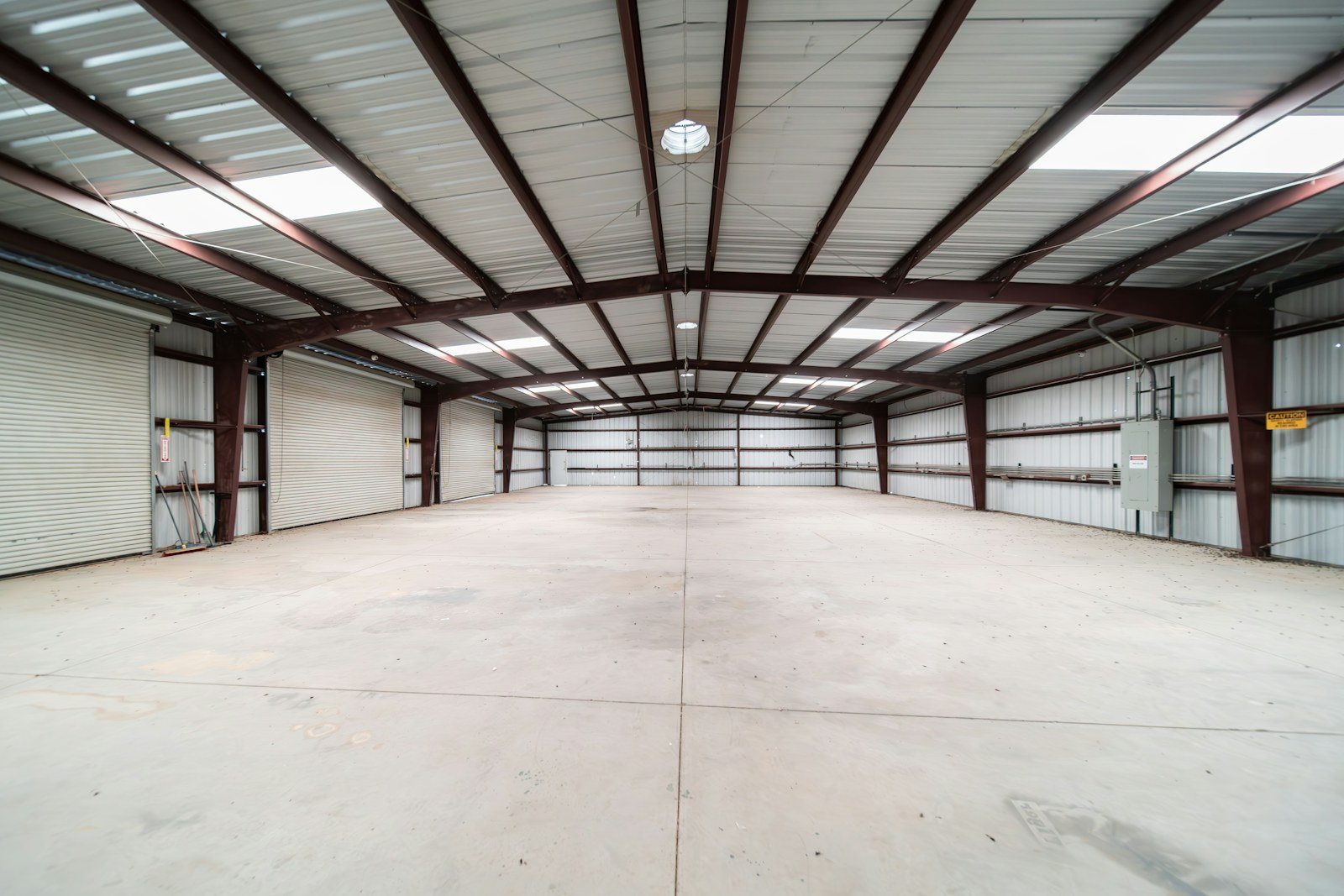
A warehouse relocation is a space problem before it is a trucking problem. Rented storage trailers do two jobs in one: they hold the product that has nowhere to go while the old building empties, and they stage the product that has to land in the new building in a particular order.
The run between the two buildings is the part people ask us about second. We do that as well, dock to dock, with our own trucks and drivers. What we do not do is the move itself. No rigging, no machinery, no racking install.
So here is the honest version of where we fit, how many trailers a phased move needs, and which parts belong to somebody else.
- Storage trailers solve the overlap problem in a move. You almost never get both buildings fully usable on the same day, and a trailer is the space that covers the gap.
- Count trailers by what is homeless at one time, not by total inventory. A 48 foot trailer holds about 24 standard pallets single stacked.
- Dock to dock shuttle runs between the old and new building are per load with no minimum term. The 3 month minimum belongs to trailer rental only.
- We are not a warehouse moving company. No riggers, no machinery, no racking teardown or install, no offices or households.
- Order the space before the week you have to be out. Same day delivery is normal when you call by noon, but loading time is not something we can deliver.
How do storage trailers fit into a warehouse relocation?
Every move we work on runs into the same bottleneck, and it has nothing to do with trucks. You cannot take racking down until it is empty. You cannot put product back until the racking is up at the other end. For a few days or a few weeks, depending on the size of the operation, a meaningful share of your inventory has no shelf anywhere.
That is the window a storage trailer covers. It is a dock height dry van sitting at your building, so a lift truck drives straight in off the dock and the product never touches the ground. You load it in whatever sequence suits your plan, you lock it, and you have access to it whenever you want it, including nights and weekends when the real work in a move tends to happen.
The better moves use trailers as a sequencing tool rather than as emergency storage. Clear one bay at a time into a dedicated trailer, label the trailer by zone, and the unload at the new building follows the same order in reverse. The worse moves rent one trailer at the last minute and fill it with whatever is in the way.
What does RMA Fleet not do in a warehouse move?
We would rather say this on the way in than after somebody has built a schedule around us. Plenty of companies call here expecting a turnkey warehouse move, because the phrase warehouse relocation services covers everything from unbolting a conveyor line to carrying desks. That is a different trade with different insurance and different equipment.
What we are is an asset based carrier with our own dry van trailers and our own drivers, family owned in West Chester since 1990. On a relocation that means two concrete things. One, you can have as much extra dock height space as you need, where you need it, for as long as the move takes. Two, freight moves between your two addresses on our trucks, on your schedule, without a broker in the middle deciding whose load matters today.
Most of our relocation customers run a specialist contractor for the machinery and racking and run us alongside for the space and the hauling.
Why does a warehouse move need swing space at all?
Look at how the dates usually fall. The lease on the current building has a hard end. The new building has a promised date from a landlord or a contractor, and that date has a way of slipping by a week or three. Permits, fire suppression, dock levelers. Nothing dramatic, just the normal list.
So you are managing two risks at once. Too little overlap and you are out of the old building before the new one can take what is in it. Too much and you are paying rent twice.
Trailers change that math because they are cheap space that shows up where you already are. A few trailers at the old dock buys you weeks of breathing room against a slipping completion date without extending a commercial lease to get it. It is the same logic we wrote about for seasonal peaks in Q4 inventory overflow and storage trailers, applied to a one time event instead of an annual one.
The other thing swing space buys is the option to move in stages. A business that can only move everything in one weekend has to shut down to do it. A business with somewhere to park a third of its inventory can move in three passes and keep shipping through two of them.
How many trailers does a phased move actually need?
Start with pallet positions rather than square feet, because that is the unit a trailer is actually measured in. A 48 foot dry van takes about 24 standard pallets on the floor, single stacked. The longer and shorter sizes scale from there, and we laid out the full arithmetic, including why storage math is lower than shipping math, in how many pallets fit in a 53 foot trailer.
Then work out the peak, not the total. A plant with 900 pallet positions is not looking for 900 pallets of trailer space. If the plan clears and rebuilds four bays at a time, and each bay holds 60 pallets, the peak exposure is 240 pallets, which is a handful of trailers rather than a fleet.
Size choice follows the lot, not just the volume. A 53 foot trailer is the most space per rental and the most pavement to place it on. A 48 foot storage trailer fits more yards comfortably. Twenty eight foot trailers exist for exactly the sites where a long trailer cannot be backed in or turned around, and on a move they are useful for isolating one department. All four sizes and the published rates sit on the storage trailer rentals pages.
One tip that costs nothing. Dedicate trailers by category rather than by whatever is closest to the door. Finished goods in one, packaging in another, slow movers in a third. The unload then follows a known order instead of a guess.
What do shuttle runs between the two buildings look like?
Once both buildings are inside our service area, which is a 100 mile radius of West Chester covering southwest Ohio, northern Kentucky and southeast Indiana, moving pallets between them is ordinary local freight for us. Our driver picks up at your old dock and delivers to your new one the same day.
The useful part during a move is the scheduling. Booking loads individually means somebody has to think about it every morning, and that somebody is already managing a relocation. A scheduled shuttle run is the same lane on the same days, planned once, which is how our dock to dock shuttle runs normally work for customers with steady lanes.
You are not committed to filling a truck either. Partial loads are fine, down to a few pallets, and during a move that matters because the last pass is never a full trailer. We covered the difference between a partial load and a full truckload in LTL versus FTL and where a partial load fits. What we will ask you for is what is moving, where it is going, and how it gets on and off the truck at both ends.
That last point is the one that catches people. Our freight service is dock to dock. If the new building has no dock yet, or the dock levelers are not in, you need a lift truck and a plan for getting pallets off the trailer at ground level. Tell us about it when you call and we can talk about whether a spotted storage trailer makes more sense for that leg than a delivery does.
When should you order the trailers and the trucks?
Rental terms make early ordering easier than people assume. Storage trailer rental runs on a 3 month minimum and then continues month to month, so a trailer that arrives two weeks early is not costing you a penalty, it is using up part of a term you were going to serve anyway. Nothing forces you to release it the day the move ends either, which matters when the new building turns out to need overflow space for a while. We went through how that term works in how long you actually rent a storage trailer for.
Freight is the opposite and that is a good thing. It is per load with no minimum term at all, so shuttle runs between the two buildings commit you to nothing past the loads you book. Do not let anyone tell you the 3 month minimum applies to the trucking. It does not, and it never has.
Settle two site details before delivery day. Where the trailer sits and what the surface is, because fresh asphalt and ground that turns to mud are a problem for the landing gear. And whether a tractor can get in, turn and back into that spot.
What usually goes wrong in a warehouse relocation?
The slipping completion date is close to universal. Plan for the new space being two or three weeks later than the landlord says and a slip becomes an inconvenience. The teams that get hurt have a lease ending on the 31st and complete faith in a date somebody else controls.
Labeling is the other one, and it is free. Number the trailers. Keep a simple list of what went into each one and which zone it came from. During the move, nobody remembers, everybody is busy, and the alternative is opening four trailers to find one pallet of packaging. The crews that do this finish the unload days earlier than the ones that do not, and they are not working any harder.
Two smaller ones. Check the new yard before you commit to a trailer size, because a lot that handled box trucks will not necessarily take a 53 footer. And do not plan the final pass as a full truckload. It never is.
Tell us the two addresses and the dates
Every relocation is its own puzzle, so the useful first conversation is short and specific. What is moving, how many pallet positions are exposed at the peak, where both buildings are, and what the schedule looks like on paper.
Call (513) 772-9490 with that, or use the quote form and pick Storage Trailer Rental or Local Trucking under Interest in, depending on which half you need first. Most customers need both. Call by noon Monday to Friday and a trailer can be on site the same day anywhere in the Tri-State area we serve, from West Chester out to the edge of the 100 mile radius.
RMA Fleet has been family owned since 1990, running our own trucks, drivers and trailers out of West Chester. We will tell you plainly which parts of your move we can take and which parts need somebody else.
Frequently asked questions
Does RMA Fleet move warehouses?
Not the move itself. We rent storage trailers and we run local freight between docks, which covers the space and the hauling side of a relocation. We do not do rigging, we do not disassemble or install racking, and we do not move production machinery, offices or households. Those jobs belong to an industrial relocation contractor or a millwright, and most of our customers run them alongside us rather than instead of us.
How many storage trailers does a warehouse move need?
Count what is homeless at the same time, not what you own. If racking comes down one bay at a time, you only ever need space for the bays that are down. A 48 foot trailer holds about 24 standard pallets single stacked, so two or three trailers covers a surprising amount of a mid size move. Tell us the pallet count and the phases and we will tell you what fits.
Can you move pallets between the old building and the new one?
Yes. That is standard local trucking for us, dock to dock, anywhere inside 100 miles of West Chester. It can be a full truckload or a partial load down to a few pallets, and it can be a scheduled shuttle run that repeats on the same days rather than loads booked one at a time. We coordinate runs of up to 100 units when a move needs that volume.
Is there a minimum rental term during a move?
Storage trailer rental runs on a 3 month minimum and then goes month to month, so a trailer you order for a move stays as long as you need it after the move is over. Local trucking is different. Freight is priced per load with no minimum term at all, so shuttle runs between two buildings carry no commitment beyond the loads you book.
How soon before the move should I order the trailers?
Earlier than most people do. Same day delivery is the standard when you call by noon, Monday to Friday, so availability is rarely the problem. The problem is that teams order trailers the week the building has to be empty, which is the week they have the least time to load them. Having the space sitting at your dock before you need it is what makes a phased move work.