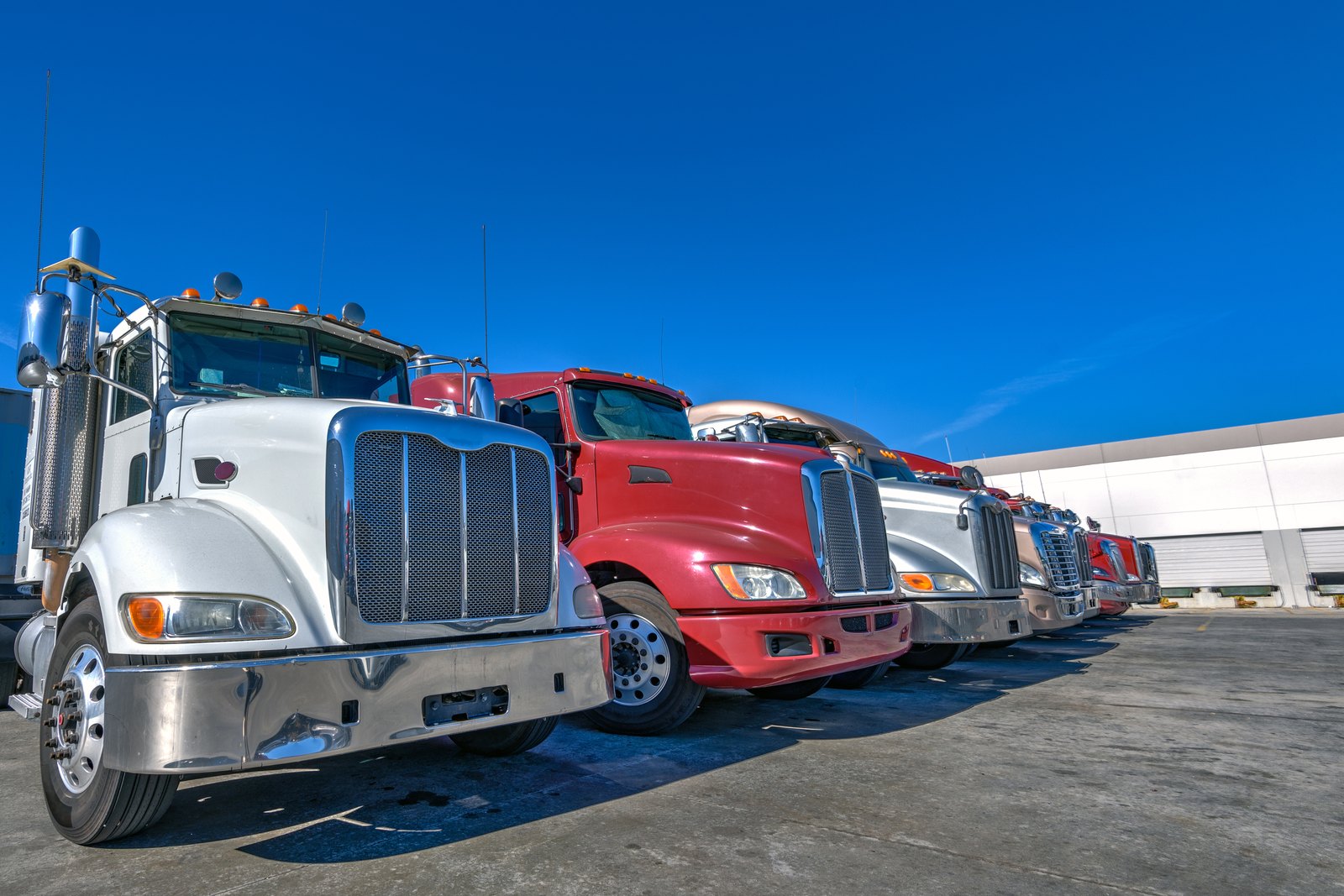
An asset based carrier owns the trucks and employs the drivers. When you book a load, the company on the phone is the company whose equipment pulls up to your dock. A non asset carrier, which in freight usually means a broker, owns no trucks and employs no drivers. It takes your load and finds one.
That is the whole definition, and nearly everything written about it is aimed at a shipper assembling a national network across long lanes. Our freight does not work that way. It moves inside about 100 miles and it usually has to move today. At that distance the ownership question stops being about capacity percentages and becomes a much shorter question: how many minutes pass between your call and a truck leaving. Here is what the term means, why it matters more on a short run than a long one, what it means when the asset is a trailer parked in your yard, and when you are genuinely better off calling a broker instead of us.
- An asset based carrier owns its trucks and employs its drivers. A broker owns neither and places your load with a third party carrier from its network.
- Most sizeable carriers now hold both kinds of authority, so the words "asset based" on a website do not by themselves mean your load will ride on that company's truck. Ask directly.
- On a short local run, ownership mainly buys you a same day answer and one phone number. Over a long multi state lane, a broker's reach is usually worth more.
- A rented storage trailer is an asset too. Who owns it is why same day placement is possible, and it is also why the rental carries a 3 month minimum.
- We own the trucks and the trailers and we broker nothing. Outside our 100 mile radius, or for long haul and refrigerated freight, we will tell you to call someone else.
What is an asset based carrier?
The word asset is doing plain accounting work here. A carrier that owns equipment carries it on the books, maintains it, insures it, parks it somewhere and employs people to operate it. A company without those things is not a lesser business, just a different one, earning its money by arranging freight rather than hauling it.
What that buys a shipper is accountability in one place. One company dispatched the truck, employs the driver and answers for the delivery window, with nobody in the middle who can accurately say the problem belongs to someone else. That is the whole practical argument. The rest of this is about when it is worth something and when it is not.
Is an asset based carrier the same thing as a freight broker?
Brokers get written about badly by carriers, and that is worth stepping around. A good broker is a useful business. Its pool of carriers is far larger than any single fleet, so it can find capacity in a tight market, cover a lane you ship twice a year, and put many movements on one invoice. Shippers running freight into thirty states would struggle without brokers, and anybody who tells you otherwise is selling their own trucks.
The trade is that you are one step removed from the driver. The company you negotiated with is not the company operating the truck, and the standards that matter on your dock belong to a carrier you did not choose and may not have heard of. On a routine long lane that distance costs you very little. On a tight local run it costs you the thing you actually needed, which was a straight answer this morning.
Why does ownership matter more on a short run than a long one?
Call us by noon and the person who picks up already knows where the trucks and drivers are, because they are ours and they started the day from here. He can tell you yes or no while you are still on the phone. A broker taking the same call has to go and find a truck first, and that takes as long as it takes. Neither is dishonest. One has the information in the building and the other has to go get it, and inside a hundred miles that difference is the service.
The gap widens on the day something goes wrong, which in local freight is most weeks. A receiver turns a driver away at the gate. A dock appointment slips two hours and the next stop is now in question. Somebody loaded the wrong skid. With our own truck on the road, the dispatcher can reach the driver directly, move the sequence, and call you back with a real time instead of a promise to look into it. When the truck belongs to a carrier three parties away, every one of those steps becomes a message passed down a chain, and by the time the answer comes back the window is gone.
Multi stop work makes the point hardest. A route with eight stops is not eight bookings, it is a sequencing problem, and it is only simple when every truck and every driver on that route answers to the same dispatcher. We have run coordinated operations with up to a hundred units moving together, and that is not something anyone arranges load by load through a network of other people's carriers. The same logic sits underneath our dock to dock delivery and shuttle runs, where the whole value is that the schedule holds.
What does asset based mean when the asset is a trailer you rent?
Every article on this term lists the same assets: trucks, warehouses, distribution centers. None covers the one our storage customers are actually hiring, which is the trailer itself. If you need overflow space at your building on Thursday, the question is not whether a company has a national network. It is whether it has a clean dry van within driving distance and a driver free to bring it.
Ownership also explains our terms honestly, which is worth doing because the minimum is the part people push back on. A trailer we hand you leaves our fleet. It is not earning anywhere else while it sits at your dock, and it costs two truck trips, one to deliver and one to retrieve, whether you keep it three weeks or three years. That is the real reason the rental runs on a 3 month minimum and then goes month to month. It is not a contract trick, it is what owning the asset costs. How long you actually rent a storage trailer for goes through that in full.
Say the opposite plainly too, because the two services get confused. That 3 month minimum belongs to trailer rental only. Freight is priced per load with no minimum term at all, and nothing about renting a trailer obliges you to move anything on our trucks. The two sides of our commercial storage trailer rental and freight business are sold separately, and plenty of customers only ever use one.
How do you tell which one you are hiring?
The second question is the one almost nobody asks, and it is the one that has changed. Plenty of carriers now hold operating authority and brokerage authority at the same time, which means a company can describe itself as asset based with complete accuracy and still place your particular load with another carrier when its own trucks are committed. That is not a scandal. It is how a fleet keeps covering freight on a bad week, and for many shippers it is the right arrangement.
It does change who is accountable on the day, so ask how it works before you need to know. Does a load only get brokered with your permission, and will you be told at the time or find out when an unfamiliar truck arrives. A company that has thought about this answers in a sentence. One that gets vague has told you something useful anyway.
The third question is the cheapest tell of all. Ask who you reach when a delivery is late, and listen for whether the answer is a person or a process. If you are weighing several names, our page on how to choose between trucking companies in Cincinnati lays out the three kinds of company you will find in the search results and what each one is built for.
When is a broker the better call?
Our lane is same day short haul inside roughly 100 miles of West Chester, covering southwestern Ohio, northern Kentucky and southeastern Indiana. Freight bound for either coast, refrigerated long haul, flatbed, heavy haul, tank work, anything oversized: that is not us, and a carrier built for it will do it better and cheaper. We are also not an LTL carrier and run no terminal network, so if your freight belongs in a terminal to terminal system we will say so.
There is a quieter case for a broker too. If a load is not urgent and you are buying mainly on price, a broker shopping it across a wide carrier pool can often come in under a single fleet's number, because it is matching your freight to a truck that was already going that way. We would rather tell you that than win the load and hand it to somebody else. When something sits outside what we do, the honest answer on the phone is worth more to both of us than a quote we would have to broker out, and the same thinking runs through how we handle partial loads and full truckloads.
What do we own, and what do we not do?
In practice that means one company answers for the load from the quote to the delivery. If we cannot cover something, you hear it on the phone that day rather than two hours later from a carrier you have never spoken to. Loads run from a box truck load or a few pallets up to a full truckload, dock to dock, across the Tri-State and the towns we serve inside the hundred mile radius.
The limits are worth putting in writing, because a list of what a company owns is only useful next to a list of what it does not do. We have no riggers and we do not disassemble, install or move machinery, racking, offices or households. We do not offer truck mounted forklift delivery, so a destination needs either a dock or its own lift truck to take the freight off. We do not reposition a rented trailer around your yard once it is placed. We do not run refrigerated equipment or offer cold storage, we do not rent shipping containers, we do not run tank trailers, and we do not do hot shot or expedited gooseneck work.
Our office is open Monday to Friday, 7:00 am to 6:00 pm. Call (513) 772-9490 by noon on a weekday and same day pickup and delivery is the standard across the Tri-State, or use the quote form and pick Local Trucking under Interest in so it reaches the right desk. If what you need is space rather than movement, storage trailer rental in Cincinnati is the other half of what we do, and which of the two problems you are solving is usually clear within a sentence or two on the phone.
The short version
An asset based carrier owns its trucks and employs its drivers. A broker arranges your freight onto somebody else's. Over long distances the broker's reach often wins. Inside a hundred miles, where the whole job is a fast answer and a schedule that holds, owning the equipment is what makes that possible, and it is why we can tell you yes or no while you are still on the phone. Ask any carrier whether it owns the truck, whether it brokers, and who you call when a driver is late. Those answers sort a list quickly, and if yours belongs somewhere else, we will say so.
Frequently asked questions
What does asset based carrier mean?
It means the trucking company owns the equipment it runs and employs the drivers who operate it. The tractors, the trailers and the drivers belong to the carrier rather than being arranged from a third party, so the company that quotes your load is the company that hauls it and answers for the delivery.
Is an asset based carrier the same as a freight broker?
No, they are close to opposites. A broker owns no trucks and employs no drivers. It holds brokerage authority, takes your load and places it with a carrier from its network. An asset carrier hauls the freight on its own equipment. Both are legitimate businesses and both are regulated, they just do different jobs and suit different kinds of freight.
Does RMA Fleet broker any freight?
No. We move freight on our own trucks with our own drivers, and we do not place loads with other carriers. If a load falls outside what we run, whether that is distance, equipment or timing, we tell you on the phone rather than passing it along to somebody else. That is the trade off of hiring a single local fleet: one company is accountable, and it will not stretch to cover everything.
Is an asset based carrier more expensive than a broker?
It depends on the load, and the honest answer for local freight is that neither is automatically cheaper. A broker's quote includes a margin on top of what the truck is paid, but a broker can also match your freight to a truck already heading that way. A local fleet is usually strongest on short notice and short distance, where speed and a held schedule are worth more than shopping the rate. Call with the pickup, the destination and the timing and we will quote it.
How do I know whether a carrier owns the truck running my load?
Ask three questions before you book. Do you own the truck that will run this load. Do you also hold brokerage authority, and will you tell me if my load gets brokered. Who do I call directly if the driver is running late. Many carriers hold both kinds of authority, so a company can call itself asset based and still broker your particular load, which is worth knowing before the day rather than after.