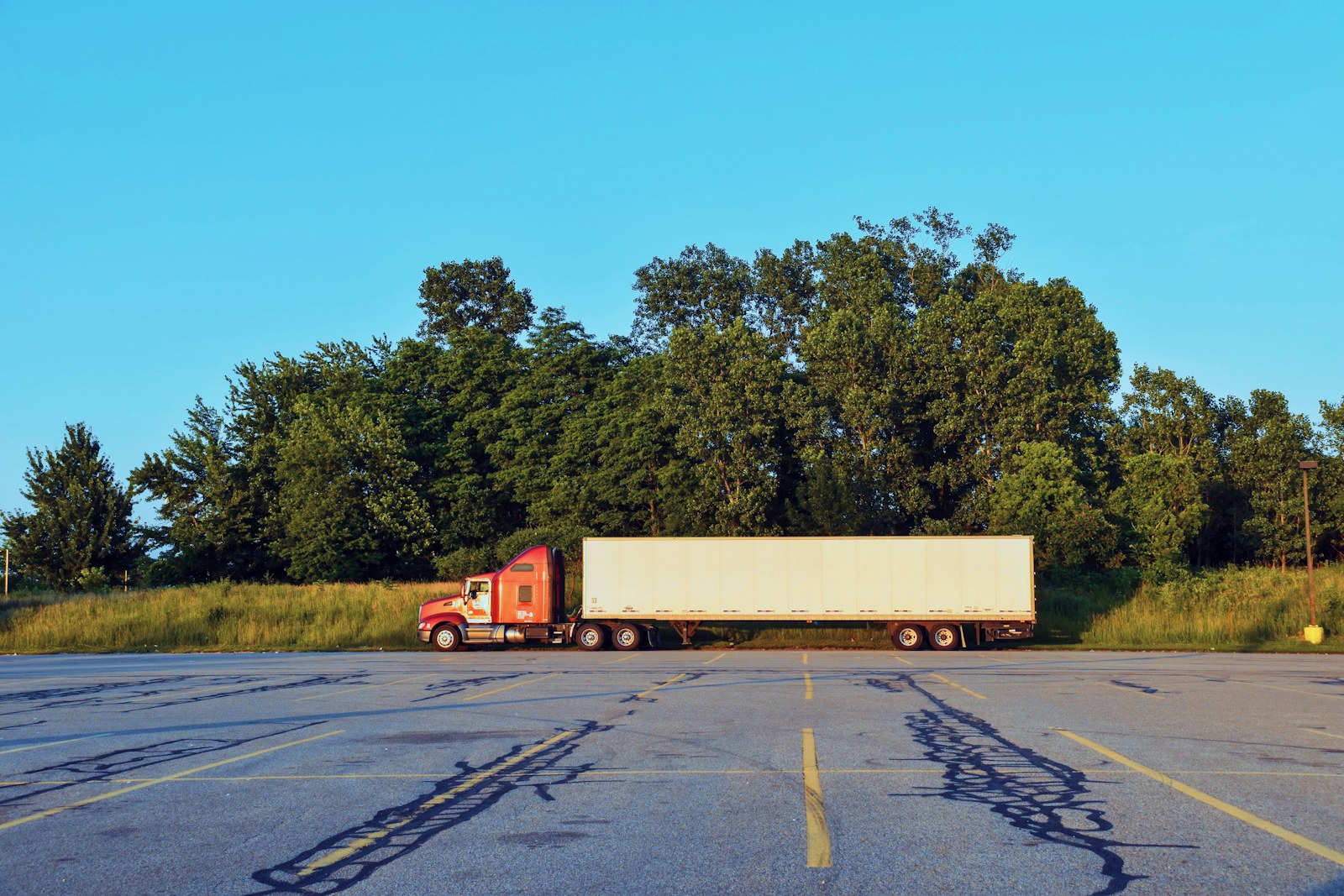
Most warehouse container rentals start as a two-month patch. A line adds a shift, a customer pushes inventory forward, somebody rents a 40-foot box for the overflow, and that box is still sitting against the fence three years later. Nobody chose it as the long-term answer. It just never left, and the crew has been hand-carrying freight in and out of it ever since.
We rent dock-height storage trailers around the Cincinnati Tri-State, and a steady share of our calls come from operations managers staring at exactly that box. The question is usually some version of the same thing: is a trailer actually better, or just different? The honest answer is that it depends on who does the loading, people or machines. This post walks the swap end to end, what improves, what you give up, how the changeover happens without stopping a shift, and the cases where you should keep the container you have.
- A dock-height trailer puts the storage floor at roughly 48 inches, level with your dock and your forklift's natural travel, so a pallet moves once instead of twice. That is the whole case in one sentence.
- The swap pays off when machines do the loading. If a forklift already stages freight at your container's door, every pallet is taking an extra step the trailer would delete.
- Keep the container when people walk in for items by hand. Ground-level entry is its one real advantage, and for hand-loaded storage it is decisive.
- The changeover happens in an overlap window: trailer delivered and spotted, contents crossed by forklift over a day or two, container off hire once it is empty. No shift stops.
- Trailers run 28, 45, 48, and 53 feet on a 3-month minimum, then month-to-month, delivered and spotted by our own trucks.
Why do warehouses replace ground-level containers with trailers?
Watch a crew work a ground-level container on a busy day and count the touches. The forklift brings a pallet to the door, sets it down, and unless someone has built a ramp the machine stops there. The load gets broken down, walked in, restacked. Coming back out, the same dance in reverse. None of that shows up on an invoice, which is why the container survives budget review after budget review. It shows up in labor hours and in the freight that gets left in the aisles because putting it away is a project.
A trailer deletes the height mismatch instead of managing it. Backed to a door, it works like forty more feet of building: dock plate down, forklift in, full pallets to the nose. We wrote up the mechanics of that workflow in why warehouses pick 53-foot trailers over ground-level containers, and the capacity math in how much fits in a 53-foot trailer. The short version: 26 pallet positions on the floor of a 53-footer, against roughly 20 in a standard 40-foot container, and every one of them reachable by machine. There is also a quieter win. A trailer floor rides four feet above the lot, so spring runoff, plowed snow piles, and the puddle that forms at your container's door threshold every March stop being a storage problem.
What changes on the dock when you make the swap?
The workflow change is the point, so be clear-eyed about both sides of it. On the gain side, the trailer runs at the speed of your dock. Cycle counts happen by forklift with a spotter, whole product lines move in an afternoon, and the trailer can be loaded in the same motion as the outbound freight it sits next to. Receiving crews do not treat it as a separate chore, because it is not one. It is another door.
On the cost side, the trailer is a worse junk drawer. A container at ground level quietly becomes the place where facilities keeps spare filters, where the trade-show booth lives, where somebody ducks in for one carton at 4:55. A trailer resists that use, and honestly, most operations are better off for it. But if that grab-and-go pattern is real work your building depends on, weight it properly before you swap, or keep a small container for the hand-carried stuff and put the palletized volume in the trailer.
When is the ground-level container still the right call?
We sell trailers, so take this section as the reason you can trust the rest of the post. A container is the better tool for a shop where two technicians walk in for parts all day. It is the better tool when the stored product never sits on a pallet. And it is the only tool when the site cannot take a trailer at all: a 53-footer needs a straight approach and room for the tractor to pull out from under it, and some urban lots simply do not have it. Our 28-footer solves a lot of tight sites, but not every one.
The mistake we see is not warehouses keeping containers. It is warehouses that outgrew the container years ago and kept absorbing the double-handling because the box was already there and the rent was familiar. If your container gets loaded by forklift, at a door it can never enter, that is the tell. The full comparison lives in storage trailer vs. storage container if you want the two options side by side.
How does the swap happen without stopping operations?
The changeover is less of a project than most managers expect, because the trailer shows up ready to work. We deliver with our own trucks, spot the trailer where you want it, set the landing gear, and leave it level and door-ready. What actually happens on drop day is covered in how storage trailer delivery works, and the placement rules are the same ones your inbound carriers already live by: firm ground, straight approach, doors facing the work.
Then the crossing. Book the container's off-hire date a week or two out, and move contents in the slack between receiving waves rather than as one heroic Saturday. Crews who do this well treat the move as a free inventory audit: everything coming out of the container gets counted, anything expired or orphaned gets purged instead of re-stored, and the trailer starts its life with a clean manifest. Plan the trailer's spot before delivery day so the forklift's path from container door to trailer door is short and stays out of your live dock lanes. Most swaps we see finish inside two working days without a single delayed shipment, and the crew that grumbled about the project on Monday is loading the trailer without thinking about it by Friday.
What does a trailer cost compared to a container?
We will not print numbers here, because a quote depends on size, term, and where the trailer is going, and a blog post that guesses at your rate is not doing you a favor. What we will tell you straight is the term structure: three months minimum, then month-to-month until you release it. If your container runs month-to-month today, time the swap so the trailer's first quarter covers a stretch you know you will need the storage, and the minimum stops mattering. What usually decides the math is not the monthly rate anyway. It is the labor hiding in the double-handling, and that number is one your own timecards already know.
Put the floor at dock height and stop paying the handling tax
If a box on the ground has been quietly taxing every pallet your crew touches, the fix is not a better ramp. It is putting the storage floor where the freight already lives. Our storage trailer rentals run 28, 45, 48, and 53 feet across the Cincinnati Tri-State.
Check your town on the areas we serve page, then request a quote or call (513) 772-9490 and tell us what is in the container today. We have been putting trailers on warehouse lots since 1990, we deliver and spot with our own trucks, and if a container genuinely fits your operation better, we will say so before you spend a dollar.
Frequently asked questions
Can a forklift work inside a storage trailer?
Yes. Storage trailers are built for it. Backed to a dock door with the plate down, a forklift drives straight in and works the full length of the floor. Spotted in the yard, a portable ramp does the same job. Loading a trailer by machine is the normal case, not a workaround.
Do we need a free dock door to use a storage trailer?
No. A trailer earns the most backed to a live door, but plenty of our trailers sit spotted in the yard on landing gear, worked by forklift over a ramp or loaded at the rear from a dock-height platform. If your doors are full, that is a spotting question, not a dealbreaker.
What sizes do rental storage trailers come in?
Our fleet runs 28, 45, 48, and 53 feet. The 53-footer is the warehouse default because it matches the trailers your dock already handles and holds 26 standard pallet positions on the floor. The 28-footer fits tight yards where a full-length trailer cannot swing.
Is there a minimum rental term on a storage trailer?
Yes. Every rental carries a 3-month minimum, then runs month-to-month until you release the trailer. If your container agreement runs month-to-month today, plan the overlap so the trailer's first quarter lines up with a period you know you will need the storage.